
‘The Diplomat’ Does the G7: An Abundance of Intrigue, a Regrettable Shortage of Sherpas
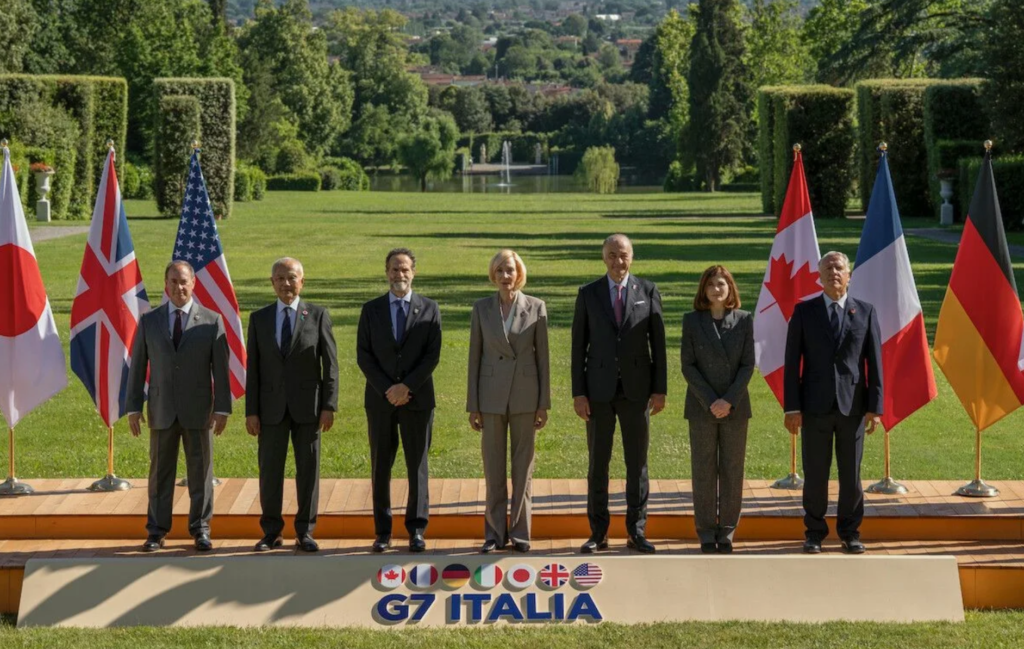 ‘The Diplomat’ Season 4: A ‘bella figura’ Italian G7, with intrigue/Netflix
By Peter M. Boehm
November 2, 2026
The last time I reviewed a season of The Diplomat for Policy magazine in my capacity as an expert witness based on a long former career toiling amid the rhetorical Gordian knots and lukewarm coffee urns of real-life diplomacy, the good folks at Netflix took note.
As a result of my Policy review of Season 3, I received an invitation to the recent premiere of Season 4 in Washington DC. Since my current day (and sometimes evening) job is to serve as a Canadian senator, my work got in the way of my burgeoning TV critic career and I was unable to attend.
But like many Policy readers (and writers), I did tune into Season 4, which dropped on October 15th, eager to follow the diplomatic, personal, and romantic adventures of U.S. Ambassador to the United Kingdom and ambivalent Second Lady Kate Wyler (Keri Russell).
After more than three decades as a diplomat and having often suppressed my own opinions in a vocation that demands discretion, I’m now making up for lost indiscretion time. So, be warned — there will be spoilers.
Mirroring as it does our current times — only with greater plausibility and therefore a less arduous suspension-of-disbelief threshold — this season is darker.
It begins with a visit by U.S. President Grace Penn (Allison Janney) to the United Kingdom amid a breach in relations with mercurial British Prime Minister Nicol Trowbridge based on a series of unfortunate misunderstandings including over Penn’s involvement in the attack on the British aircraft carrier that opens Season 1, her subsequent framing of her dead predecessor for that crime, and the covert American removal of a loose super-nuke called the Poseidon from a sunken Russian sub in UK coastal waters.
Hence, when President Penn survives a sniper’s bullet after an assassination attempt at Windsor Castle — to which the presidential motorcade is re-routed after protesters block the highway from Heathrow to London — such is the state of her UK approval ratings that the list of possible suspects is everyone.
Meanwhile, President Penn’s relationship with Kate Wyler’s charismatic husband, Hal Wyler (Rufus Sewell), her vice president, grows closer — and possibly more conspiratorial — much to the chagrin of Penn’s underoccupied husband Todd (Janney’s fellow West Wing alum Bradley Whitford).
A whole new realm of transatlantic marital cross-complication arises between the first and second couples when President Penn appoints Todd her Special Envoy to the United Kingdom, in part to get him out from underfoot at the White House.
This appointment, which would have been utterly unimaginable in the days before the Trump administration normalized casual diplomatic nepotism, will place Todd as second gentleman in the office next door to Kate as ambassador and second lady in the London Embassy.
Having been established as a character whose reflexively Machiavellian tendencies — including the blackmailing of Trowbridge that spurs his resignation — are sometimes redeemed by good intentions and efficient outcomes and sometimes not, Kate accepts the inconvenience and additional intrigue of having the president’s husband cast in the role of her office spouse for the trade-off in influence — an approach that, predictably, only succeeds up to a point.
The action is transposed to a G7 Summit in Lucca, Tuscany, where matters political, geopolitical, and interpersonal come to a head.
 Bilateral tension: New UK Prime Minister Bethan Vaughn (Jodie Whittaker) and Ambassador Kate Wyler (Keri Russell)
The new no-nonsense British prime minister, Bethan Vaughn (Jody Whittaker, whom Dr. Who fans will recognize), has doubled down on Trowbridge’s anger and intractability over the downward spiral in the special relationship, we are faced with the possibility that the president of the United States has lost her mind, and it looks like the summit will collapse in a NATO article-4 spat.
(Article 4 specifies formal consultations when there is a threat to territorial integrity, sovereignty, and security).
After Grace Penn’s efforts to bully and outmaneuver her detractors become themselves so exponentially incriminating that they alienate everyone on her own team, the season finale ends in the sort of spectacular diplomatic incident that many senior officials have surely daydreamed about but never thought they’d see dramatized.
While this season maintained the broad authenticity of Season 3 in replicating many aspects of diplomacy, allow me a few IRL observations from a summit veteran who served as Canada’s Sherpa for six G7s.
G7 summits usually have a “pool spray” at the beginning and then the doors close, leaving only the leaders and their Sherpas (I have been to Italian summits in Naples and Taormina — both bella figura events). The dramatic group exit as a protest is the sort of thing more viable — and sometimes executed — at the UN General Assembly. Dramatic group resignations are much rarer.
While Sherpas do get a brief mention at this fictional G7, they remain largely omitted from the action, much to my chagrin.
Why could a Sherpa have not intervened in the climactic showdown between President Penn and Kate Wyler and negotiated a peaceful resolution as a means of avoiding the public unravelling that followed? Or maybe all the Sherpas could have formed a human chain to dramatically block the exit of the main meeting venue until the conflict was resolved? Perhaps Season 5 will have a more Sherpa-centric plotline. Alas, if I’d been at the premiere, I could have helpfully raised these points in person.
Woeful Sherpa underrepresentation aside, as in previous seasons, the dialogue is crisp, informed, and witty. And in longer scenes, the exchanges about policy are given such room to breathe that the drama, the stakes, and the role that character plays in the conduct of states becomes its own cultural cargo. We don’t need a reminder of the role that personality can play in foreign policy these days, but watching good, flawed people try to make the best decisions possible under the circumstances feels like a victory for reality in a reality-show world.
In dealing with the Poseidon crisis, Kate Wyler — quoting her husband back to himself — has one of the best lines: “A cover-up’s not a solution. It’s just a minute to get your pants on.” It makes up for in visual potency what it lacks in accuracy re. the life span of the average cover-up.
The mise-en-scène is excellent, and I enjoyed seeing the interiors of Lancaster House (originally built for the Duke of York, now used by the Foreign Office) in London substituting for a palace or two. I’ve spent many a long day and night there, negotiating summit outcomes.
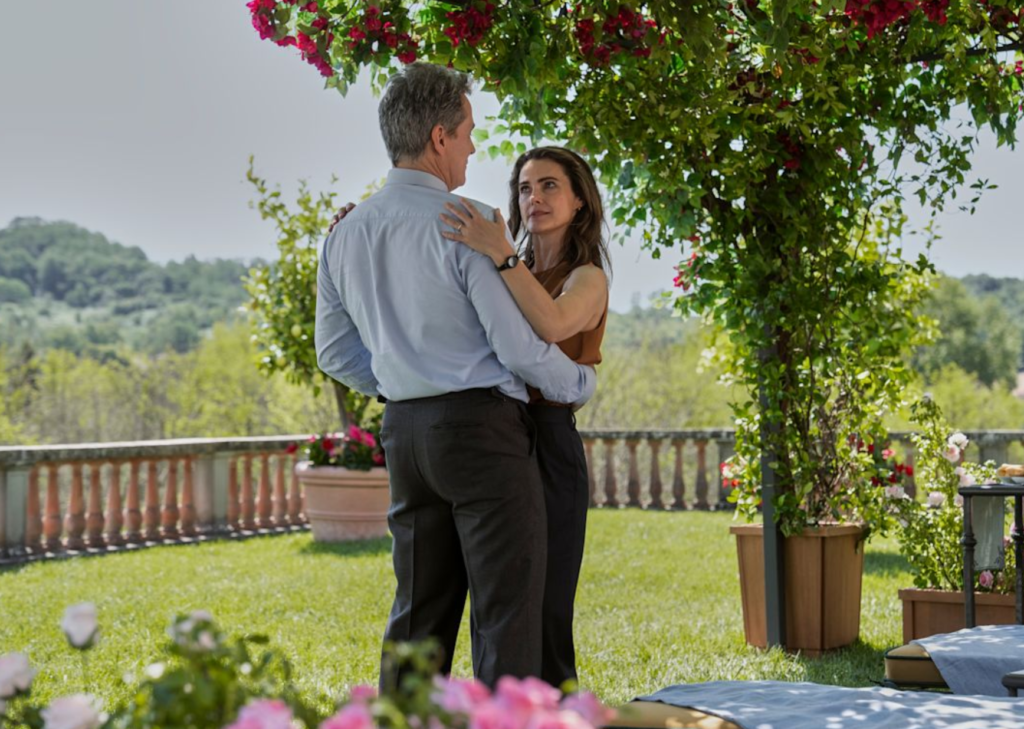 Vice President Wyler and Ambassador Wyler committing the unforced time-management error of a pre-summit tryst/Netflix
And, on a purely logistical matter, summit itineraries are so jammed with bilateral meetings and briefing sessions that little time remains for the sort of pre-summit romantic interlude of the kind Kate and Hal indulged among the Tuscan cypress trees. G7 trysts tend to be the purview of journos and French simultaneous translators, not delegation principals.
Above all, The Diplomat provides us with some important takeaways for today’s geopolitical and global diplomatic environment.
Gender is one. Our lead character, Kate Wyler, the US president, her Chief of Staff, the new British prime minister and foreign secretary, the CIA station chief in London, are all women.
This reflects diplomacy in 2026. More than half of Canadian heads of mission are women, and we have our second woman foreign minister in a row. The strong women in this series shoulder huge responsibilities and maintain personal lives, despite all the challenges of foreign and public service. Canada is not unique in this regard.
The series excels at capturing the challenges that exist in romantic relationships in any foreign service, including Kate and Hal as ambassador and vice-president. But the developing relationship between CIA station chief Eidra Park (Ali Ahn) and embassy deputy head of mission Stuart Heyford (Ato Essandoh) is especially interesting, particularly their decision to live together while on posting and in fact become a couple with all that that connotes in a foreign service environment (explaining this would require another essay).
Stuart is my favourite character. He is a State Department professional foreign service officer and I can identify with that connection to my earlier life. As the deputy head of a large mission, he must advise and earn the ongoing trust of his boss (Ambassador Wyler), manage staff and be the constant link to Foggy Bottom in DC.
As the conscience of the show, after much reflection about the goings-on in the Penn presidency, he decides to submit a cable to the State Department’s “dissent channel,” a platform that has existed since the early 1970s to allow foreign service professionals to express their dissent on foreign policy matters directly to headquarters without fear of disclosure or reprisals.
Stuart does just that, President Penn finds out and summarily has him fired. Inevitably, he could not abide with the policy decisions taken by his own government and his statement “we have perfected the art of weaponized incompetence” underscores his moral dilemma.
In real life, former Secretary of State Antony Blinken said that consulting the dissent channel helped him in his decision-making. When our Senate foreign affairs and international trade committee visited Washington in the context of our study of the Canadian foreign service in 2022, we were briefed on the State Department’s dissent channel. Global Affairs Canada does not have a similar feedback vehicle, opting instead for increasingly frequent top-down anonymous “check-ins” with staff.
As a public servant, telling truth to power is never an easy thing at any level. Someone makes the decisions for which you have provided nuanced arguments, pro, con or somewhere in-between. Of course, telling truth to power assumes the relevant policy decision will be altered accordingly. It also assumes that the conduct of international relations is always rational. It is frequently not.
Season four of The Diplomat is more than an entertainment. It is an allegory. President Penn is a leader who is unafraid to toss away traditional alliances, venerable international institutions and common sense in pursuit of exercising her right to might.
Where have we seen and heard this before? Yet at the end of the season, her courtiers are standing up in opposition. Clearly there are more adventures to come, perhaps even as art imitates life.
Senator Peter M Boehm is a former ambassador and deputy minister. Among other assignments during his diplomatic career, his service included postings in Cuba, Costa Rica and as Ambassador and Permanent Representative to the Organization of American States in Washington, DC. He also served as Canada’s Ambassador to Germany, and as Canada’s Sherpa for several G7 Summits.