
Irreconcilable Differences: Mark Carney Says ‘Enough’
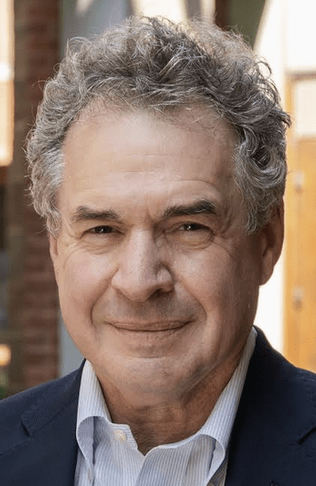
By Drew Fagan
August 22, 2026
Prime Minister Mark Carney said in the wake of walking away from bilateral trade talks that he was reluctant to enter a trade war with the United States, but he didn’t sound reluctant. He sounded like someone who’d turned the other cheek enough in the face of underhanded tactics — the threats, the falsehoods, the gloating, most of all the surprise, last-minute demands — to feel fully justified.
It didn’t even sound like a close call.
Now, it would be nice to see someone behind us as Canada takes on an economy more than 12 times our size. A middle power coalition? American consumers? The U.S. business community? Ottawa has been hoping for ages that it would find its voice, but it remains cowed by the Trump administration’s coercive omerta. There’s honour for Canada in what’s happened, and quite possibility a lot of loneliness.
The federal government tried every tactic possible to avoid this outcome – a tit-for-tat trade war that could easily escalate.
Ottawa sought to fold these tariff talks into the bigger negotiation to come for the overall renewal of CUSMA – which is now itself in doubt – but without success.
Ottawa emphasized the deeply integrated and mutually advantageous nature of Canada-U.S. trade at every opportunity, which didn’t go far with a president who rejects the premise that cross-border ties are or ever can be win-win. Ottawa promised to withdraw policies in the digital and cultural sectors that Washington opposed, in the failed hope it would win points.
In the end, the unbridgeable gap between the Trump administration and Canada is not just about tariffs and quotas, it’s about perspective.
U.S. Trade Representative Jamieson Greer told Fox News Saturday that Canada turned down the best U.S. offer made to any country in the 20 months since Mr. Trump’s global trade offensive began. To Canada, what was on offer was worse than a betrayal, including of the CUSMA deal that Mr. Trump himself signed and praised in 2018.
It was a transparent attempt to undermine the Canadian economy by forcing homegrown plants to move south and forcing global investment to conclude that the only safe way to service the continental economy is from the United States.
President Donald Trump’s overnight imposition of new tariffs is small in dollar terms — impacting less than $30-billion in exports on a $1.3-trillion bilateral trading relationship in goods and services. But it is in addition to the punishing tariffs on autos, steel, aluminum and lumber — all export-oriented sectors — that have been in place for months and would have been reduced only somewhat if the U.S. deal had been accepted Friday night.
Despite all of this, the Canadian economy continues to grow.
But the risk to that growth is heightened by the likelihood of escalation. Mr. Carney plans to respond to the new tariffs “dollar for dollar.” He has no choice politically. Polls show Canadians are primed for a fight. But a mid-sized economy is going toe-to-toe with a superheavyweight, with all the usual arguments applying, including that tariffs are just taxes on ourselves.
In the end, the unbridgeable gap between the Trump administration and Canada is not just about tariffs and quotas, it’s about perspective.
Here, the tariffs and the counter-tariffs hurt the Canadian economy more than the U.S. one. That’s why Ottawa eventually withdrew many of the counter-tariffs imposed after Mr. Trump launched his protectionist crusade.
At the same time, the $16.6 billion in dollar-for-dollar counter-tariffs Justin Trudeau levied in response to Trump’s steel and aluminium tariffs on Canada Day 2018 were lifted, along with the tariffs that provoked them, as part of the negotiation that produced CUSMA. Given the degree to which Canadian boycotts of American booze have hit home with Trump, the potential effectiveness of targeted retaliatory tariffs could prove surprising.
But here we are. The era of Canada-US free trade seems, at least for now, dead.
Today’s circumstances echo a previous era entirely of the Canada-U.S. tariff epic. In the latter decades of the 1800s, the United States essentially offered Canada a simple choice: free trade if Canada joins the United States, otherwise high tariffs. Canada responded with the national policy — a regime of counter-tariffs and government-led economic development that remains part of Canadian lore. It is less recognized, though, that this was Canada’s weakest period historically — prolonged recession mixed with occasional depression that didn’t dissipate until the early 1900s with the rapid settlement of the West.
Happily, as Mark Twain is reputed to have said, history doesn’t repeat itself, but it often rhymes. The resilience of the Canadian economy over the past 18 months has surprised many analysts. Per Carney’s diversification policy, exports beyond the United States are growing. Domestic infrastructure development is accelerating. Foreign investment continues to roll in. Mr. Carney’s global investment summit in Toronto next month will be a strong gauge of where Canada stands.
As for CUSMA, the bilateral tariff negotiations were meant to be only a prelude, clearing the way for a full-fledged review of the trilateral agreement that includes Mexico. When and how this goes ahead given the events of the past 24 hours is unclear, though there is nothing stopping the United States and Mexico from making their own deal.
The CUSMA talks, from Canada’s perspective, were expected to deal particularly with two thorny issues:
- Does North America develop a common strategy regarding China? The Trump administration wants to enforce one as it seeks to manage China’s economic challenge. But it’s hard to see how Ottawa will respond warmly to a continent-wide strategy when the White House has rejected definitively the circumstances of bilateral trade.
- Relatedly, what comes of Canada-U.S. discussions about increased production of critical minerals. Given Chinese dominance, it would make sense in normal times for the United States and Canada to coordinate more given Canada’s significant resources. But these are not normal times. Again, it’s hard to see Canada bending now to the U.S. demand that it be the favoured critical minerals purchaser.
Since surfing to power on a wave of Trump-provoked nationalist sentiment, Mr. Carney has tried to walk a very narrow path. His main message has been that Canada must build greater independence politically and economically amid the darkening forces of U.S. hegemony. But he has also underlined at key moments the primordial importance of the U.S. marketplace to Canadian prosperity.
He’s wanted at the very least to protect and maintain Canada-U.S. trade as he refocuses the country on domestic and global markets, knowing that the refocus will take time. He now knows with certainty that his incremental approach to that transition will not be eased by Trump’s United States.
Policy Contributing Writer Drew Fagan is a professor at the Munk School of Global Affairs & Public Policy, University of Toronto. He was recently a visiting professor at Yale University.